|
This course is offered through Osher Online in collaboration with Northwestern University School of Professional Studies. These are live, online courses and not recorded. All necessary information and access links will be shared with enrolled participants after registration closes.
- Day of the week: W
- Dates: 7/8/2026 to 8/12/2026
- Time: 11:00 AM to 12:30 PM
- Number of classes in this course: 6
- Fee: $72.00
- Limit: 13
Course Description and Instructor Information:
When the Erie Canal opened in 1825, it revolutionized American travel and transportation, but its inspiration came from Europe’s earlier canal networks. In this course, we will trace the development of French, British, and Irish canals in the 17th and 18th centuries. We will follow the story into the 19th century as we turn to American canals, especially in New York and Pennsylvania. Along the way, we will explore how canals reflect the politics and aspirations of different nations and why they still matter for global shipping today. Whether we are drawn to engineering marvels, the people who built them, or the pleasure of drifting along a canal or hiking a towpath, we will deepen our appreciation of canals’ importance and beauty.
Your instructor: Bernie Carlson
Bernard (Bernie) Carlson is Vaughan Professor Emeritus of Humanities at the University of Virginia and an expert on invention, entrepreneurship, and technology’s role in society. He received the Sally Hacker Prize from the Society for the History of Technology and the William Middleton Prize from the IEEE, and filmed Understanding the Inventions that Changed the World. Now based in Ireland, he directs the MS program in AgInnovation at the University of Galway, where he trains adult learners in product development, startups, and sustainable farming.
Reasons you may be unable to register:
- Registration may not be open
- You have not added a membership to your cart or renewed your membership
- You are not logged in (“Sign In” on the blue bar above)
- You may need to refresh your screen
Purchase Membership
|
|
|
|
This course is offered through Osher Online in collaboration with Northwestern University School of Professional Studies. These are live, online courses and not recorded. All necessary information and access links will be shared with enrolled participants after registration closes.
- Day of the week: Tu
- Dates: 7/7/2026 to 8/11/2026
- Time: 11:00 AM to 12:30 PM
- Number of classes in this course: 6
- Fee: $72.00
- Limit: 13
Course Description and Instructor Information:
In this course, we will trace the evolution of literature specifically written for children - from its earliest forms to the modern era. We will begin with the oral traditions that underpin all storytelling, then follow the shift toward published works created specifically with young readers in mind. We will survey key moments and turning points that shaped the growth of children’s literature as a distinct field. We will conclude by analyzing how a well-known children’s literature has evolved over time.
Your instructor: Blake Regnier
Blake Regnier is a former middle school reading interventionist and current English instructor for Worthington Learning Center. Regnier is also an adjunct instructor of English for Minnesota West Community and Technical College. With a diverse background in literary traditions spanning classical works through the modern era, his primary research interest has been in Victorian era monsters and other assorted "things that go bump in the night."
Reasons you may be unable to register:
- Registration may not be open
- You have not added a membership to your cart or renewed your membership
- You are not logged in (“Sign In” on the blue bar above)
- You may need to refresh your screen
Purchase Membership
|
|
|
|
This course is offered through Osher Online in collaboration with Northwestern University School of Professional Studies. These are live, online courses and not recorded. All necessary information and access links will be shared with enrolled participants after registration closes.
- Day of the week: Tu
- Dates: 7/7/2026 to 8/11/2026
- Time: 1:00 PM to 2:30 PM
- Number of classes in this course: 6
- Fee: $72.00
- Limit: 13
Course Description and Instructor Information:
In this course, we will explore how a tiny nation – Portugal – played an outsized role in world history. We will examine Portugal’s fifteenth and sixteenth century maritime expansion (once called the “Discoveries”), as well as its central role in the transatlantic trade in enslaved people. We will trace how Portugal, once a fringe region of the Roman Empire, emerged as the only independent kingdom on the Iberian Peninsula as Castile grew into Spain. We will follow Portugal’s rise as a global power, with outposts stretching from Brazil to Japan, and then its decline as rival empires overtook it – culminating in twentieth century poverty under Europe’s longest dictatorship. Finally, we will consider how this past continues to shape Portuguese identity and culture in the decades since a revolution ushered in democracy. As we survey Portugal’s landscapes, art and architecture, and food, we will see why record numbers of Americans are now visiting the country.
Your instructor: Alison Roberts
Alison Roberts is a journalist with nearly four decades of experience, reporting in her native UK and later internationally for English-language outlets including the BBC, NPR, and Bloomberg News. Her work has covered politics, finance, sports, and the arts. She has edited or contributed to a dozen guidebooks and provided online updates for Fodor’s, Time Out, and other publishers. Now based in Portugal, she is writing a history of the country and has explored it extensively from north to south.
Reasons you may be unable to register:
- Registration may not be open
- You have not added a membership to your cart or renewed your membership
- You are not logged in (“Sign In” on the blue bar above)
- You may need to refresh your screen
Purchase Membership
|
|
|
|
This course is offered through Osher Online in collaboration with Northwestern University School of Professional Studies. These are live, online courses and not recorded. All necessary information and access links will be shared with enrolled participants after registration closes.
- Day of the week: Th
- Dates: 7/9/2026 to 8/13/2026
- Time: 11:00 AM to 12:30 PM
- Number of classes in this course: 6
- Fee: $72.00
- Limit: 13
Course Description and Instructor Information:
Coffee will provide a lively lens on major past and present issues, including climate change, social life, health, global North–South differences, social and economic justice, tourism, and slavery. We will begin “from the ground up,” tracing coffee from planting and processing through shipping and, ultimately, the beverage in our cups - part of nearly two billion cups consumed daily worldwide. We will explore coffee’s global history and its shift from an elite drink to an everyday staple. Drawing on current research, we will examine coffee and health, as well as practical questions such as how more income might reach farmers and how coffee production might adapt to a changing climate. The instructor will share firsthand experiences from coffee farms around the world, discuss a range of brewing methods, and demonstrate how coffee is brewed. Sessions will be interactive, with time for questions throughout.
Your instructor: Robert Thurston, PhD
Robert Thurston, PhD, is Emeritus Professor of History at Miami University (Oxford, Ohio). He earned a BA in History from Northwestern University and a PhD in modern Russian history from the University of Michigan. His writing spans twentieth-century Russian/Soviet history, witch hunts (Europe and Salem), the body in the Anglosphere (1880–1920), and coffee as an economic and social force. A devoted coffee educator, he has opened a roastery and coffee shop and has visited coffee farms from Asia to South America.
Reasons you may be unable to register:
- Registration may not be open
- You have not added a membership to your cart or renewed your membership
- You are not logged in (“Sign In” on the blue bar above)
- You may need to refresh your screen
Purchase Membership
|
|
|
|
This course is offered through Osher Online in collaboration with Northwestern University School of Professional Studies. These are live, online courses and not recorded. All necessary information and access links will be shared with enrolled participants after registration closes.
- Day of the week: W
- Dates: 7/15/2026 to 8/19/2026
- Time: 3:00 PM to 4:30 PM
- Number of classes in this course: 6
- Fee: $72.00
- Limit: 13
Course Description and Instructor Information:
In this course, we will gain a comprehensive introduction to Hindu traditions, emphasizing the importance of ritual, knowledge, and devotion across Hindu traditions from classical to contemporary times. We will introduce Hinduism’s South Asian roots, that can be traced to the Vedic tradition, which provides key conceptual and religious foundations. We will consider early and classical expressions of Hindu thought and religious life through the complex term dharma. Major Hindu deities are then introduced alongside associated narratives, practices, and iconography. We will examine the six major schools of Hindu philosophy using both secondary and primary sources. We will then consideration bhakti (devotion) that has characterized diverse Hindu traditions across centuries. Finally, we will consider sacred space and places including temples and tīrthas, as well as the interrelationship of the concept of divine presence and pilgramage practices the relate to these holy sites.
Your instructor: Eileen Goddard
Eileen Goddard is a Religious Studies Ph.D. candidate at the University of California, Santa Barbara. Goddard lectures on Indian and Asian religious traditions at both UCSB and the University of Houston. Her research centers on the interrelationship of soteriology and embodiment in the sixteenth-century Gauḍīya Vaiṣṇava Kṛṣṇa tradition. She is a comparative scholar whose research also includes the Pātañjala Yoga, Advaita Vedānta, Śrīvaiṣṇava, and Pāñcarātra traditions, analyzing how emotion, desire, meditation, and ritual variously contribute towards ultimate realization of self and/or divine Other.
Reasons you may be unable to register:
- Registration may not be open
- You have not added a membership to your cart or renewed your membership
- You are not logged in (“Sign In” on the blue bar above)
- You may need to refresh your screen
Purchase Membership
|
|
|
|
This course is offered through Osher Online in collaboration with Northwestern University School of Professional Studies. These are live, online courses and not recorded. All necessary information and access links will be shared with enrolled participants after registration closes.
- Day of the week: F
- Dates: 7/24/2026 to 8/28/2026
- Time: 11:00 AM to 12:30 PM
- Number of classes in this course: 6
- Fee: $72.00
- Limit: 13
Course Description and Instructor Information:
Explore 100 years of American history through objects often taken for granted in everyday life: signs. Led by the American Sign Museum (ASM) staff, this course introduces the Museum’s origins and features a conversation with ASM’s founder about why signs matter. We will examine how signs have evolved due to trends in commerce and technology. We will also explore case studies of three major food companies who used signage to shape their brands. In the final session, we will take a virtual visit to ASM’s neon shop to see how a neon sign is made.
Your instructor: Erin Holland
The American Sign Museum (Cincinnati, Ohio) covers more than 100 years of American sign history and displays more than 800 signs and artifacts, making it the most comprehensive museum of its kind. With a mission to educate the community about the history of the sign industry and its significant contribution to commerce and the American landscape, the Museum is organized to preserve, archive and display a historical collection of signs in their many types and forms.
Reasons you may be unable to register:
- Registration may not be open
- You have not added a membership to your cart or renewed your membership
- You are not logged in (“Sign In” on the blue bar above)
- You may need to refresh your screen
Purchase Membership
|
|
|
|
This is the first lecture in the six lecture series.
- Day of the week: W
- Date: 7/8/2026 to 7/8/2026
- Time: 9:00 AM to 11:30 AM
Lecture Description and Speaker Information:
What Can the Declaration of Independence Teach Us About Artificial Intelligence?
In this talk—marking the 250th anniversary of the Declaration of Independence and the 70th anniversary of the coining of the term artificial intelligence at Dartmouth—we revisit the Declaration as a lens for understanding AI.
We begin with a curious question: why do modern AI systems often claim that the Declaration of Independence is AI-generated? Using this example, we unpack how these systems actually work. Along the way, we explore both their remarkable capabilities and their fundamental limitations.
From there, we zoom out. The Declaration of Independence raises enduring questions about what makes a system legitimate: who it serves, where its authority comes from, and when it should be challenged. As AI becomes embedded in everyday life, these questions feel more relevant than ever. This talk offers a clear, accessible introduction to AI, grounded in both technical intuition and broader ideas about trust, responsibility, and human judgment.
Brinnae Bent
Executive in Residence in the Engineering and Professional Programs,
Pratt School of Engineering at Duke; Director, Duke TRUST Lab
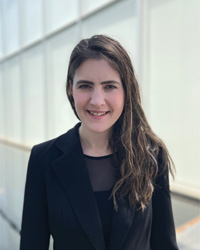 Brinnae Bent is the Associate Director of the Society-Centered AI Initiative, the Director of the Duke TRUST Lab, and faculty in the Pratt School of Engineering at Duke University, where she teaches courses on Artificial Intelligence and Cybersecurity. She is a leader in bridging the gap between research and industry in machine learning, having led projects and developed algorithms for the largest companies in the world. More importantly, she has built algorithms that have meaningful impacts— from helping people walk to noninvasively monitoring glucose. Her current research explores questions like “how can explainable AI help in the conservation of endangered species?”, “how do we prevent your sleep monitor from getting hacked?”, and “how do we align AI systems with how humans think about concepts?” Dr. Bent actively contributes open-source tools and translates high-impact research into practice. Beyond research, Dr. Bent is deeply committed to education, and her education initiatives have been featured by OpenAI Academy, Backyard Brains, and CNET. She teaches advanced courses in explainable AI, deep learning, reinforcement learning, and cybersecurity, while also pioneering “K-100” outreach initiatives to bring engineering and data science to diverse audiences. She seeks to empower the next generation of thinkers who will shape ethical, impactful technology. Dr. Bent holds a BS from North Carolina State University and an MS and PhD from Duke University. Brinnae Bent is the Associate Director of the Society-Centered AI Initiative, the Director of the Duke TRUST Lab, and faculty in the Pratt School of Engineering at Duke University, where she teaches courses on Artificial Intelligence and Cybersecurity. She is a leader in bridging the gap between research and industry in machine learning, having led projects and developed algorithms for the largest companies in the world. More importantly, she has built algorithms that have meaningful impacts— from helping people walk to noninvasively monitoring glucose. Her current research explores questions like “how can explainable AI help in the conservation of endangered species?”, “how do we prevent your sleep monitor from getting hacked?”, and “how do we align AI systems with how humans think about concepts?” Dr. Bent actively contributes open-source tools and translates high-impact research into practice. Beyond research, Dr. Bent is deeply committed to education, and her education initiatives have been featured by OpenAI Academy, Backyard Brains, and CNET. She teaches advanced courses in explainable AI, deep learning, reinforcement learning, and cybersecurity, while also pioneering “K-100” outreach initiatives to bring engineering and data science to diverse audiences. She seeks to empower the next generation of thinkers who will shape ethical, impactful technology. Dr. Bent holds a BS from North Carolina State University and an MS and PhD from Duke University.
The Agenda:
9:00 AM Introduction (Eastern Time) Approximate times.
9:10 –10:10 AM Speaker
10:10 -10:40 AM Break
** During the 20-30 minute break those attending the lecture can enjoy a break and submit questions. Also, during this time, the staff at Dartmouth will monitor the email and Chat for those submitted questions from those watching online. Then the Moderator goes through all the questions that were submitted at the during the break, and groups them together for the same questions so that he/she is prepared with questions when the break is over.
10:40– 11:30 AM Question and Answers
Stay and continue the conversation after the livestreamed lecture is over.
**NOTE – Several past attendees have said that the Question and Answer part of the lecture is one of the best parts.
- Fee:
- Member: $20.00
- Non-Member: $35.00
- (non-refundable)
- Limit: 35
- Location: OLLI at UVA (opens in new tab), 1 Morton Drive, Terrace Level Charlottesville, VA 22903
Reasons you may be unable to register:
- Registration may not be open
- You have not added a membership to your cart or renewed your membership
- You are not logged in (“Sign In” on the blue bar above)
- You may need to refresh your screen
Purchase Membership
|
|
|
|
This is the second lecture in the six lecture series.
- Day of the week: W
- Date: 7/15/2026 to 7/15/2026
- Time: 9:00 AM to 11:30 AM
Lecture Description and Speaker Information:
Can AI Think Like a Doctor?
What does it mean to name a disease, make a diagnosis, or truly understand what is wrong with someone? This talk explores those questions through a wide-ranging and accessible story about medicine, technology, and the changing nature of medical knowledge. Over the past two centuries, medicine has moved from bedside observation and the study of symptoms, to statistics and population health, to computers designed to assist with diagnosis. Today, with the rise of artificial intelligence, we are once again being asked to rethink what medical expertise is and how it should be used.
Rather than offering a narrowly technical account, this lecture invites a broader reflection on how medicine has tried to bring order to the uncertainty of illness. Why have doctors and scientists repeatedly turned to new tools in the hope of making care more accurate, more rational, and more humane? What has been gained, and what has been lost, along the way?
The second half of the talk turns to the present moment. It offers a balanced introduction to modern medical AI, including its genuine strengths, its important limitations, and the risks of relying on it too easily. The session will conclude with practical suggestions for how older adults can use AI tools to better understand health information, prepare for medical visits, and take a more active role in their own care.
Adam Rodman
Assistant Professor, Harvard Medical School; Director of AI Programs, Shapiro Center for Research and Education, Beth Israel Deaconess Medical Center
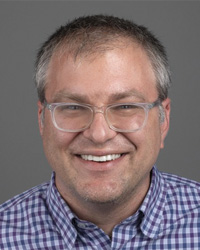
Adam Rodman is a general internist and medical educator at Beth Israel Deaconess Medical Center and an assistant professor at Harvard Medical School. He is the Director of AI Programs for the Carl J. Shapiro Center for Education and Research, and he leads the steering group for integration of AI into the medical school curriculum. He is also an associate editor at NEJM AI, as well as a visiting researcher at Google DeepMind. His research focuses on medical education, clinical reasoning, integration of digital technologies, and human-computer interaction, especially with AI. His first book is entitled Short Cuts: Medicine, and he is the host of the American College of Physicians podcast Bedside Rounds.
Adam completed his residency in internal medicine at Oregon Health and Science University in Portland, OR, and his fellowship in global health at Beth Israel Deaconess Medical Center while practicing in Molepolole, Botswana. He lives in Boston with his wife and two young sons.
The Agenda:
9:00 AM Introduction (Eastern Time) Approximate times.
9:10 –10:10 AM Speaker
10:10 -10:40 AM Break
** During the 20-30 minute break those attending the lecture can enjoy a break and submit questions. Also, during this time, the staff at Dartmouth will monitor the email and Chat for those submitted questions from those watching online. Then the Moderator goes through all the questions that were submitted at the during the break, and groups them together for the same questions so that he/she is prepared with questions when the break is over.
10:40– 11:30 AM Question and Answers
Stay and continue the conversation after the livestreamed lecture is over.
**NOTE – Several past attendees have said that the Question and Answer part of the lecture is one of the best parts.
- Fee:
- Member: $20.00
- Non-Member: $35.00
- (non-refundable)
- Limit: 35
- Location: OLLI at UVA (opens in new tab), 1 Morton Drive, Terrace Level Charlottesville, VA 22903
Reasons you may be unable to register:
- Registration may not be open
- You have not added a membership to your cart or renewed your membership
- You are not logged in (“Sign In” on the blue bar above)
- You may need to refresh your screen
Purchase Membership
|
|
|
|
This is the third lecture in the six lecture series.
- Day of the week: W
- Date: 7/22/2026 to 7/22/2026
- Time: 9:00 AM to 11:30 AM
Lecture Description and Speaker Information:
AI: Too Artificial? Too Intelligent? Too Much Energy?
Dan Reicher—Stanford and Dartmouth senior scholar, former U.S. Assistant Secretary of Energy, and Google’s Director of Climate and Energy—will discuss his take on AI from several perspectives: fastgrowing applications; problematic uses; political and financial considerations; and his own experience with this transformational technology. Importantly, he will examine the massive energy and water demands of the AI data centers and how to address them. At the same time, Dan will consider ways that AI might accelerate the clean energy transition—and help address climate change—by improving electric grid operations, increasing industrial energy efficiency, and managing building energy use.
Dan W. Reicher
Senior Scholar, Stanford Doerr School of Sustainability; Senior Fellow, Dartmouth Irving Institute for Energy & Society
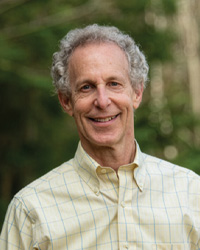
Dan Reicher is an entrepreneur, investor, policymaker, lawyer, and educator focused on clean energy and climate change. Reicher has served three U.S. presidents, testified before the U.S. Congress more than 50 times, led the launch of Google’s pathbreaking climate and clean energy work, oversaw a $1.2 billion annual clean energy R&D budget as U.S. Assistant Secretary of Energy, and co-founded the nation’s first investment firm focused exclusively on renewable energy project finance.
Reicher served from 2011 to 2018 as founding executive director of the Steyer-Taylor Center for Energy Policy and Finance, a joint center of the Stanford Law and Business Schools. He is currently a Stanford Doerr School senior scholar, senior fellow at Dartmouth’s Irving Institute for Energy and Society, senior advisor with the Climate Adaptive Infrastructure Fund, and policy and business advisor. Reicher came to Stanford from Google, where he served since 2007 as Director of Climate Change and Energy Initiatives.
Reicher’s federal roles include: Assistant Secretary of Energy for Energy Efficiency and Renewable Energy; Department of Energy Chief of Staff and Deputy Chief of Staff; Acting Assistant Secretary of Energy for Policy; a member of the Obama and Clinton presidential transition teams; a member of the Secretary of Energy Advisory Board; a member of the National Academy of Sciences Board on Energy and Environmental Systems; a staff member of the President’s Commission on the Accident at Three Mile Island; a law clerk to a federal district court judge; and a paralegal in the U.S. Department of Justice.
Before his position at Google, Reicher was President and Co-founder of New Energy Capital, the nation’s first investment firm focused exclusively on renewable energy project finance, and Executive Vice President of Northern Power Systems, one of the nation’s oldest renewable energy companies. Earlier in his career Reicher was as an Assistant Attorney General in Massachusetts and an attorney with the Natural Resources Defense Council. He was also an adjunct professor at Yale University, Vermont Law School and the University of Maryland.
In 2012 Reicher received an honorary doctorate from the State University of New York College of Environmental Science and Forestry and was also named one of the five most influential figures in U.S.
The Agenda:
9:00 AM Introduction (Eastern Time) Approximate times.
9:10 –10:10 AM Speaker
10:10 -10:40 AM Break
** During the 20-30 minute break those attending the lecture can enjoy a break and submit questions. Also, during this time, the staff at Dartmouth will monitor the email and Chat for those submitted questions from those watching online. Then the Moderator goes through all the questions that were submitted at the during the break, and groups them together for the same questions so that he/she is prepared with questions when the break is over.
10:40– 11:30 AM Question and Answers
Stay and continue the conversation after the livestreamed lecture is over.
**NOTE – Several past attendees have said that the Question and Answer part of the lecture is one of the best parts.
- Fee:
- Member: $20.00
- Non-Member: $35.00
- (non-refundable)
- Limit: 35
- Location: OLLI at UVA (opens in new tab), 1 Morton Drive, Terrace Level Charlottesville, VA 22903
Reasons you may be unable to register:
- Registration may not be open
- You have not added a membership to your cart or renewed your membership
- You are not logged in (“Sign In” on the blue bar above)
- You may need to refresh your screen
Purchase Membership
|
|
|
|
This is the fourth lecture in the six lecture series.
- Day of the week: W
- Date: 7/29/2026 to 7/29/2026
- Time: 9:00 AM to 11:30 AM
Lecture Description and Speaker Information:
What Will Be the Economic Impacts of AI?
Artificial intelligence represents a transformation comparable in scale to electricity or the internet, yet most business leaders are approaching it as simply another productivity tool. Wheeler will argue this is a fundamental strategic error with consequences extending far beyond individual companies to the broader economy and workforce. Drawing on his experience living through the internet transformation—where companies like Amazon reimagined everything while others like Sears merely optimized existing models—Wheeler will examine why the current moment demands urgent rethinking, what’s at stake when leaders prioritize short-term efficiency over long-term transformation, and what becomes possible when change is embraced correctly. He will explore specific examples across industries, discuss implications for the next generation entering the workforce, and explain why the choices being made today will determine economic outcomes for decades to come.
Patrick Wheeler
Executive Director of the Center for Digital Strategies, Tuck School of Business at Dartmouth
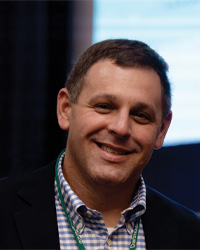
Patrick Wheeler serves as Executive Director of the Center for Digital Strategies at the Tuck School of Business at Dartmouth, where he has established himself as a pioneering force in artificial intelligence education and technology leadership development. As an early advocate for AI education in business schools, Wheeler launched Dartmouth's first generative AI programming in early 2022 and co-created Tuck's inaugural AI-focused course in 2023. He founded and leads the Dartmouth AI Conference, now entering its fourth year in 2026 as it celebrates the 70th anniversary of AI being established as a field at Dartmouth, growing from 150 to 400 attendees.
Wheeler's teaching philosophy emphasizes that organizations must fundamentally rethink their strategy and operations for AI rather than simply applying it for efficiency gains—a perspective informed by his experience navigating the early internet transformation and cloud revolution. He leads comprehensive AI education initiatives teaching MBA students and undergraduates, conducting hands-on workshops where students build technology products using AI tools, and developing practical applications. Since 2018, he has educated hundreds of participants through programming that combines theoretical understanding with practical strategy development.
Wheeler's impact extends beyond campus through his advisory work on AI strategy with CEOs, private sector organizations, and federal government entities. He frequently moderates panels at industry conferences and has facilitated discussions with experts from organizations including Anthropic, Microsoft, Google, and OpenAI. His ability to forge meaningful partnerships has resulted in collaborative research with Google and immersive learning experiences in technology ecosystems worldwide.
Prior to joining Tuck, Wheeler built a diverse career spanning consulting, technology, and innovation across four continents. At CEB (now Gartner), he created a low-code e-learning product that generated multi-million dollar revenue within its first year. He also served as a trusted aide to U.S. Senator Patrick Leahy (D-VT), t
The Agenda:
9:00 AM Introduction (Eastern Time) Approximate times.
9:10 –10:10 AM Speaker
10:10 -10:40 AM Break
** During the 20-30 minute break those attending the lecture can enjoy a break and submit questions. Also, during this time, the staff at Dartmouth will monitor the email and Chat for those submitted questions from those watching online. Then the Moderator goes through all the questions that were submitted at the during the break, and groups them together for the same questions so that he/she is prepared with questions when the break is over.
10:40– 11:30 AM Question and Answers
Stay and continue the conversation after the livestreamed lecture is over.
**NOTE – Several past attendees have said that the Question and Answer part of the lecture is one of the best parts.
- Fee:
- Member: $20.00
- Non-Member: $35.00
- (non-refundable)
- Limit: 35
- Location: OLLI at UVA (opens in new tab), 1 Morton Drive, Terrace Level Charlottesville, VA 22903
Reasons you may be unable to register:
- Registration may not be open
- You have not added a membership to your cart or renewed your membership
- You are not logged in (“Sign In” on the blue bar above)
- You may need to refresh your screen
Purchase Membership
|
|
|
|
This is the fifth lecture in the six lecture series.
- Day of the week: W
- Date: 8/5/2026 to 8/5/2026
- Time: 9:00 AM to 11:30 AM
Lecture Description and Speaker Information:
Is AI Leading Us Toward a More Dangerous World Disorder?
AI lies at the heart of the strategic competition between the U.S. and China, including the use of AI in intelligence, cyber and military operations. As AI adoption accelerates in the national security space, the American people and their elected representatives must grapple with a number of critical questions: How will AI change the future of deterrence and warfare? What ethical issues will the use of AI in national security raise? What norms or principles should serve as guardrails for the use of AI? How do we get other nations to embrace these norms? And how do we train a whole generation of military officers to ensure human accountability for AI-driven outcomes on the battlefield?
Michèle Flournoy
Co-Founder and Managing Partner, WestExec Advisors; Co-Founder and Chair, Center for a New American Security
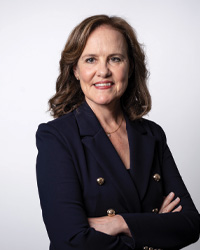
Michèle Flournoy is Co-Founder and Managing Partner of WestExec Advisors, and a Co-Founder, former Chief Executive Oaicer, and now Chair of the Center for a New American Security (CNAS). Michèle served as the Under Secretary of Defense for Policy from February 2009 to February 2012. She was the principal advisor to the Secretary of Defense in the formulation of national security and defense policy, oversight of military plans and operations, and in National Security Council deliberations. She led the development of the Department of Defense’s 2012 Strategic Guidance and represented the Department in dozens of foreign engagements, in the media and before Congress.
Prior to confirmation, Michèle co-led President Obama’s transition team at the Defense Department. In January 2007, Michèle co-founded CNAS, a bipartisan think tank dedicated to developing strong, pragmatic and principled national security policies. She served as CNAS’ President until 2009, and returned as CEO in 2014. In 2017, she co-founded WestExec Advisors, a strategic advisory firm.
Michèle serves on the boards of CNAS, Booz Allen Hamilton, the Council on Foreign Relations, Amida Technology Solutions, and CARE. She serves on a number of advisory boards, including for The Leadership Council for Women in National Security, The Mission Continues, PIMCO, and Girl Security. She is a member of the Aspen Strategy Group. She is a former member of the President’s Intelligence Advisory Board and the CIA Director’s External Advisory Board, and the Secretary of Defense’s Defense Policy Board.
Michèle earned a bachelor’s degree from Harvard University and a master’s degree from Balliol College, Oxford University, where she was a Newton-Tatum scholar.
The Agenda:
9:00 AM Introduction (Eastern Time) Approximate times.
9:10 –10:10 AM Speaker
10:10 -10:40 AM Break
** During the 20-30 minute break those attending the lecture can enjoy a break and submit questions. Also, during this time, the staff at Dartmouth will monitor the email and Chat for those submitted questions from those watching online. Then the Moderator goes through all the questions that were submitted at the during the break, and groups them together for the same questions so that he/she is prepared with questions when the break is over.
10:40– 11:30 AM Question and Answers
Stay and continue the conversation after the livestreamed lecture is over.
**NOTE – Several past attendees have said that the Question and Answer part of the lecture is one of the best parts.
- Fee:
- Member: $20.00
- Non-Member: $35.00
- (non-refundable)
- Limit: 35
- Location: OLLI at UVA (opens in new tab), 1 Morton Drive, Terrace Level Charlottesville, VA 22903
Reasons you may be unable to register:
- Registration may not be open
- You have not added a membership to your cart or renewed your membership
- You are not logged in (“Sign In” on the blue bar above)
- You may need to refresh your screen
Purchase Membership
|
|
|
|
This is the sixth lecture in the six lecture series.
- Day of the week: W
- Date: 8/12/2026 to 8/12/2026
- Time: 9:00 AM to 12:00 PM
Lecture Description and Speaker Information:
How Can We Build Human Morality Into AI?
NOTE: This session will take place from 9:00 AM until 12:00 PM.
Artificial intelligence (AI) is now being used to make many lifechanging decisions in medicine, law, transportation, the military, business, and other areas. Critics object that using AI in these areas is inhumane and too likely to lead to harm, unfairness, and other moral wrongs. I will admit these dangers but reply that these decisions can be made safer and more ethical by building human moral values into the AI decisionmaker. Our team does this by surveying human moral judgments at two levels and then correcting for ignorance, confusion, and partiality. To show how our methods work in practice, I will demonstrate our websites, report initial empirical findings for kidney allocation and dementia, and finally discuss potential future applications to criminal law, transportation, business, and the military.
Walter Sinnott-Armstrong
Chauncey Stillman Distinguished Professor of Practical Ethics, Duke University
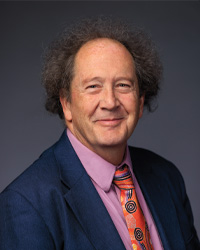
Walter Sinnott-Armstrong was born in Memphis, Tennessee, and attended the Hotchkiss School, Amherst College (BA 1977), and Yale University (PhD 1982). He taught at Dartmouth College 1981-2009 and at Duke University since 2010.
Sinnott-Armstrong is Chauncey Stillman Distinguished Professor of Practical Ethics in the Department of Philosophy and the Kenan Institute for Ethics at Duke University with secondary appointments in Duke’s Law School and Department of Psychology and Neuroscience. He has served as co-chair of the Board of Officers of the American Philosophical Association.
Sinnott-Armstrong has published eight books, 21 edited collections, and over 250 articles and chapters in leading venues, including top journals in psychology, law, and philosophy. His research has addressed a wide variety of central issues in applied ethics, empirical moral psychology and neuroscience, epistemology, informal logic, and philosophy of law, religion, and psychiatry. His current focus is on moral artificial intelligence, political polarization, and various topics in moral psychology and brain science, including free will, consciousness, and moral responsibility. His popular trade books include Morality Without God?, Think Again: How to Reason and Argue, and Moral AI and How We Get There (with Jana Schaich Borg and Vincent Conitzer).
Sinnott-Armstrong co-teaches a Massive Open Online Course, Think Again, on the Coursera platform with over a million students registered. He co-directs Summer Seminars in Neuroscience and Philosophy, which trains philosophers in neuroscience and neuroscientists in philosophy. He is widely sought as a speaker on a wide variety of topics to both academic and public audiences.
The Agenda:
9:00 AM Introduction (Eastern Time) Approximate times.
9:10 –10:10 AM Speaker
10:10 -10:40 AM Break
** During the 20-30 minute break those attending the lecture can enjoy a break and submit questions. Also, during this time, the staff at Dartmouth will monitor the email and Chat for those submitted questions from those watching online. Then the Moderator goes through all the questions that were submitted at the during the break, and groups them together for the same questions so that he/she is prepared with questions when the break is over.
10:40– 11:30 AM Question and Answers
Stay and continue the conversation after the livestreamed lecture is over.
**NOTE – Several past attendees have said that the Question and Answer part of the lecture is one of the best parts.
- Fee:
- Member: $20.00
- Non-Member: $35.00
- (non-refundable)
- Limit: 35
- Location: OLLI at UVA (opens in new tab), 1 Morton Drive, Terrace Level Charlottesville, VA 22903
Reasons you may be unable to register:
- Registration may not be open
- You have not added a membership to your cart or renewed your membership
- You are not logged in (“Sign In” on the blue bar above)
- You may need to refresh your screen
Purchase Membership
|
|
|
|
This course is offered through Osher Online in collaboration with Northwestern University School of Professional Studies. These are live, online courses and not recorded. All necessary information and access links will be shared with enrolled participants after registration closes.
- Day of the week: Tu
- Dates: 7/21/2026 to 8/25/2026
- Time: 3:00 PM to 4:30 PM
- Number of classes in this course: 6
- Fee: $72.00
- Limit: 13
Course Description and Instructor Information:
This course will arm us with the knowledge we need to keep ourselves and our loved ones safe when engaging with the healthcare system. Health care today is more complex, technical, and volatile than ever. Medical harm (unintentional but often preventable) injures and kills hundreds of thousands of patients each year. In this course, we will learn how to prevent the most common types of medical harm including medication errors, patient care accidents, procedural and surgical complications, infections, and diagnostic mistakes. Patient safety experts and advocates will provide us with practical tips and insights to navigate the healthcare system confidently and safely. Through presentations, videos, and group discussions, we will come to understand the common sources of error and discover tactics, resources, and cautions to help protect ourselves and our loved ones.
Your instructor: Hardeep Singh, MD
Hardeep Singh, MD, is a Professor of Medicine at Baylor College of Medicine in Houston and a leader in quality and safety research focused on reducing diagnostic errors, improving health information technology, and transforming health care systems. His work has informed major patient-safety initiatives and policy reports from organizations including the National Academy of Medicine, CDC, OECD, and WHO. He has received prestigious awards for his pioneering work, including the Presidential Early Career Award for Scientists and Engineers and John M. Eisenberg Patient Safety and Quality Award for Individual Lifetime Achievement.
Reasons you may be unable to register:
- Registration may not be open
- You have not added a membership to your cart or renewed your membership
- You are not logged in (“Sign In” on the blue bar above)
- You may need to refresh your screen
Purchase Membership
|
|
|
|
This course is offered through Osher Online in collaboration with Northwestern University School of Professional Studies. These are live, online courses and not recorded. All necessary information and access links will be shared with enrolled participants after registration closes.
- Day of the week: Th
- Dates: 7/9/2026 to 8/13/2026
- Time: 1:00 PM to 2:30 PM
- Number of classes in this course: 6
- Fee: $72.00
- Limit: 13
Course Description and Instructor Information:
The Declaration of Independence is a pivotal American document, not just for eighteenth-century revolutionaries, but for people throughout US history. This course will explore how individuals in Washington, D.C. used the Declaration and its ideas after independence was won. From the capital city’s planners to Union soldiers who defended Washington amid civil war, many evoked the Declaration to support their causes and shape a capital city. Spotlighting museum artifacts from the Albert H. Small Washingtoniana Collection, this course will cover D.C.’s early history through 1876, the nation’s first centennial celebration.
Your instructor: Kasey Sease
Kasey Sease, PhD, is Curator of the Albert H. Small Washingtoniana Collection at The George Washington University Museum and The Textile Museum in Washington, D.C. Beyond developing exhibitions and activating the collection, she programs the Albert H. Small Center for National Capital Area Studies. A former Managing Editor of Washington History, Kasey holds degrees from the College of William and Mary (PhD, MA, history) and the University of Virginia (BA, history and government).
Reasons you may be unable to register:
- Registration may not be open
- You have not added a membership to your cart or renewed your membership
- You are not logged in (“Sign In” on the blue bar above)
- You may need to refresh your screen
Purchase Membership
|
|
|
|
|
This course is offered through Osher Online in collaboration with Northwestern University School of Professional Studies. These are live, online courses and not recorded. All necessary information and access links will be shared with enrolled participants after registration closes.
- Day of the week: M
- Dates: 7/13/2026 to 8/17/2026
- Time: 1:00 PM to 2:30 PM
- Number of classes in this course: 6
- Fee: $72.00
- Limit: 13
Course Description and Instructor Information:
As America celebrates 250 years of independence, this course will examine the indispensable founder, George Washington. We will explore Washington's life and political leadership as well as his work as a farmer, entrepreneur, and architect. We will also review the groundbreaking work of the Mount Vernon Ladies' Association (MVLA) which has owned and managed George Washington's Mount Vernon since 1858. In that year, an intrepid group of women (who had no right to vote or own property) came together to save George Washington's home, after both the Federal Government and Commonwealth of Virginia had refused to help. MVLA formation marked the birth of the historic preservation movement.
Your instructor: Dede Petri
Anne “Dede” Neal Petri was elected the 24th Regent of the Mount Vernon Ladies’ Association (MVLA) in 2024. The MVLA, founded in 1858, is responsible for the management and preservation of George Washington's Mount Vernon. The MVLA mission is to educate the world about the leadership and character of George Washington in order to inspire future generations. Petri received her undergraduate degree in American history and literature from Harvard College and her law degree from Harvard Law School.
Reasons you may be unable to register:
- Registration may not be open
- You have not added a membership to your cart or renewed your membership
- You are not logged in (“Sign In” on the blue bar above)
- You may need to refresh your screen
Purchase Membership
|
|
|
|
This course is offered through Osher Online in collaboration with Northwestern University School of Professional Studies. These are live, online courses and not recorded. All necessary information and access links will be shared with enrolled participants after registration closes.
- Day of the week: M
- Dates: 7/6/2026 to 8/10/2026
- Time: 3:00 PM to 4:30 PM
- Number of classes in this course: 6
- Fee: $72.00
- Limit: 13
Course Description and Instructor Information:
What makes an Oriental rug so captivating—its elegant design, intricate patterns, or the mystery of its origins? In this richly illustrated course, we will discover the stories woven into these remarkable textiles. We will travel through the history and artistry of rug and carpet weaving, a tradition rooted in Asia and North Africa, with examples dating back to the 4th century BCE. Using stunning visuals and expert insights, we will explore major carpet-making cultures and regions including Anatolia, Iran, Transcaucasia, North Africa, and Central Asia. We will learn to recognize defining features of Oriental rugs: weaving traditions (nomadic and settled), key historical periods (from the Early Modern era through the nineteenth-century), purposes (from prayer to decoration), and production contexts (from royal courts to bustling markets). We will also be introduced to basic methods for identifying weave structures and deepen our appreciation of these remarkable works of art.
Your instructor: Sumru Krody
Sumru Belger Krody is Chief Curator and Avenir Foundation Curator of The Textile Museum Collection at The George Washington University Museum and The Textile Museum. A specialist in late antique and Islamic textiles, she leads the museum’s curatorial department and serves as Editor-in-Chief of The Textile Museum Journal. Krody guest lectures at George Washington University and has curated numerous exhibitions, including Enduring Traditions and the upcoming Adorning the Horse. She has written widely and co-authored nine publications, including Textile Treasures (2025).
Reasons you may be unable to register:
- Registration may not be open
- You have not added a membership to your cart or renewed your membership
- You are not logged in (“Sign In” on the blue bar above)
- You may need to refresh your screen
Purchase Membership
|
|
|
|
This course is offered through Osher Online in collaboration with Northwestern University School of Professional Studies. These are live, online courses and not recorded. All necessary information and access links will be shared with enrolled participants after registration closes.
- Day of the week: W
- Dates: 7/15/2026 to 8/19/2026
- Time: 1:00 PM to 2:30 PM
- Number of classes in this course: 6
- Fee: $72.00
- Limit: 13
Course Description and Instructor Information:
Often overlooked in traditional design and architecture courses, twentieth century women designers profoundly shaped the way we perceive, experience, and enjoy our built environments, interiors, and decorative objects. In this course, we will explore the work and influence of such designers and architects as Elsie de Wolfe, Eileen Gray, Lilly Reich, Charlotte Perriand, Dorothy Draper, Ray Eames, Zaha Hadid, and others. Their lives and the beauty of their enduring designs are documented within the context of the social and political issues they faced, as they left their unmistakable imprints upon twentieth century design.
Your instructor: Eleanor Schrader
Eleanor Schrader is an award-winning educator, lecturer, and author. She lectures and leads tours worldwide on art and architectural history. She was named a distinguished instructor at UCLA Extension, where she teaches history of architecture, interior design, furniture, and decorative arts. She completed graduate work in fine and decorative arts at Sotheby’s Institute in London and New York. She served as a design review commissioner for the City of Beverly Hills and serves on the John Lautner Foundation board of directors.
Reasons you may be unable to register:
- Registration may not be open
- You have not added a membership to your cart or renewed your membership
- You are not logged in (“Sign In” on the blue bar above)
- You may need to refresh your screen
Purchase Membership
|
|
|
|